 WeChat:

You Are Here:Home > Information dynamics
> Industry dynamics
NEWS CENTER
Recommended news
- What are the applications of customizing display racks in supermarkets
- Briefly introduce the wood grain transfer printing promotion table
- What is the scalability of medium-sized storage shelves
- How to reflect the product display effect of convenience store shelves
- How to do the layout of shelves in internet famous snack shops
Recommended products

What are the advantages of convenience store shelves in terms of space utilization
source:jt9998.cn | Release time:2025-09-29
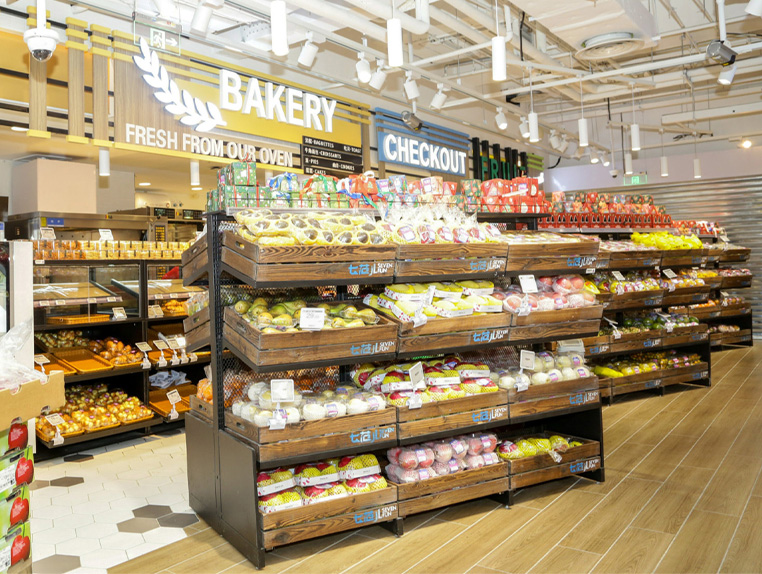
The core advantage of convenience store shelves in space utilization is "fully utilizing vertical and horizontal space, correctly matching product characteristics, and optimizing customer flow". Through scientific design, the limited convenience store space can accommodate more products without affecting the shopping experience.
1. Efficient utilization of vertical space: breaking through the limitations of the ground
Convenience stores usually have a small area (usually 20-100 square meters), and the shelves extend upwards, greatly increasing the carrying capacity of goods per unit area.
Layered design adaptation height: Shelves are generally designed with 3-5 layers, and the layer height can be flexibly adjusted according to the height of the goods (such as placing large snacks on the bottom layer, beverages on the middle layer, and inventory or promotional items on the top layer), making full use of the vertical space from the ground to the ceiling (usually 2.5-3m). Compared to flat stacking, the product capacity can be increased by 2-3 times.
Adjustable layer board flexible adaptation: The height of the layer board can be freely adjusted (some shelves support 5cm adjustment), and the space can be adjusted in real time according to the size of the product (such as small packaging candies, large bottles of laundry detergent), avoiding space waste caused by fixed layer height, especially suitable for convenience store products with multiple SKUs and large size differences.
2. Correct division of horizontal space: avoid "disorderly stacking"
Through modular design and functional zoning, the horizontal spatial layout is made more organized, balancing "multi category display" and "shopping convenience".
Modular combination adapted to store shape: Shelves are mostly standardized modules (such as 1.2m and 0.9m in length), which can be spliced into straight, L-shaped, and U-shaped shelves according to the store layout (such as rectangular and irregular corners), fitting the wall or channel layout to avoid idle space in corners and angles.
Functional zoning focuses on customer needs: areas are divided by product type (such as snack area, beverage area, daily necessities area), and each area is displayed on corresponding shelves (such as regular shelves with shelves for beverages and combination shelves with hooks for instant noodles), which not only makes horizontal space planning clear, but also facilitates customers to quickly find target products and reduces ineffective space occupation.
3. Channel and Display Balance: Balancing "Capacity" and "Experience"
Shelf design emphasizes the balance between "display density" and "customer flow" to avoid shopping congestion caused by excessive pursuit of capacity.
Reasonable channel width planning: The shelf spacing is controlled at 0.8-1.2m (1.2m for the main channel and 0.8m for the auxiliary channel), which can ensure normal customer passage (especially when pushing shopping baskets) and display goods on both sides of the channel. Compared to narrow channels (<0.6m), the display area can be increased by 30% without affecting the experience.
End shelf and corner shelf utilization: The two ends (end shelves) and corners (corner shelves) of the shelf are specifically used to display promotional items, new products, or high-frequency consumer goods (such as chewing gum and lighters), activating the previously idle "transition space" and increasing the overall exposure and utilization of the space's products.
4. Flexibly adapt to product characteristics: reduce "space waste"
In response to the characteristics of convenience store products being small, miscellaneous, and abundant, shelves are designed with special structures to meet the display needs of different types of goods and avoid idle space.
Multi form display structure: In addition to conventional shelves, shelves can be equipped with hooks (for hanging snacks and stationery), mesh baskets (for releasing bread and small toys), and dividers (for splitting small packaged goods), allowing small-sized and irregular products to be displayed "in every opportunity" and avoiding wasting shelf space due to the small size of the products.
Adaptation requirements for staggered high and low shelves: Different areas have differentiated shelf heights (such as 1.8-2m for snack area shelves and 1.5-1.8m for daily necessities area shelves). High shelves utilize high-altitude space to display inventory or low-frequency products, while low shelves facilitate customers' access to high-frequency products, ensuring space utilization and improving accessibility.
1. Efficient utilization of vertical space: breaking through the limitations of the ground
Convenience stores usually have a small area (usually 20-100 square meters), and the shelves extend upwards, greatly increasing the carrying capacity of goods per unit area.
Layered design adaptation height: Shelves are generally designed with 3-5 layers, and the layer height can be flexibly adjusted according to the height of the goods (such as placing large snacks on the bottom layer, beverages on the middle layer, and inventory or promotional items on the top layer), making full use of the vertical space from the ground to the ceiling (usually 2.5-3m). Compared to flat stacking, the product capacity can be increased by 2-3 times.
Adjustable layer board flexible adaptation: The height of the layer board can be freely adjusted (some shelves support 5cm adjustment), and the space can be adjusted in real time according to the size of the product (such as small packaging candies, large bottles of laundry detergent), avoiding space waste caused by fixed layer height, especially suitable for convenience store products with multiple SKUs and large size differences.
2. Correct division of horizontal space: avoid "disorderly stacking"
Through modular design and functional zoning, the horizontal spatial layout is made more organized, balancing "multi category display" and "shopping convenience".
Modular combination adapted to store shape: Shelves are mostly standardized modules (such as 1.2m and 0.9m in length), which can be spliced into straight, L-shaped, and U-shaped shelves according to the store layout (such as rectangular and irregular corners), fitting the wall or channel layout to avoid idle space in corners and angles.
Functional zoning focuses on customer needs: areas are divided by product type (such as snack area, beverage area, daily necessities area), and each area is displayed on corresponding shelves (such as regular shelves with shelves for beverages and combination shelves with hooks for instant noodles), which not only makes horizontal space planning clear, but also facilitates customers to quickly find target products and reduces ineffective space occupation.
3. Channel and Display Balance: Balancing "Capacity" and "Experience"
Shelf design emphasizes the balance between "display density" and "customer flow" to avoid shopping congestion caused by excessive pursuit of capacity.
Reasonable channel width planning: The shelf spacing is controlled at 0.8-1.2m (1.2m for the main channel and 0.8m for the auxiliary channel), which can ensure normal customer passage (especially when pushing shopping baskets) and display goods on both sides of the channel. Compared to narrow channels (<0.6m), the display area can be increased by 30% without affecting the experience.
End shelf and corner shelf utilization: The two ends (end shelves) and corners (corner shelves) of the shelf are specifically used to display promotional items, new products, or high-frequency consumer goods (such as chewing gum and lighters), activating the previously idle "transition space" and increasing the overall exposure and utilization of the space's products.
4. Flexibly adapt to product characteristics: reduce "space waste"
In response to the characteristics of convenience store products being small, miscellaneous, and abundant, shelves are designed with special structures to meet the display needs of different types of goods and avoid idle space.
Multi form display structure: In addition to conventional shelves, shelves can be equipped with hooks (for hanging snacks and stationery), mesh baskets (for releasing bread and small toys), and dividers (for splitting small packaged goods), allowing small-sized and irregular products to be displayed "in every opportunity" and avoiding wasting shelf space due to the small size of the products.
Adaptation requirements for staggered high and low shelves: Different areas have differentiated shelf heights (such as 1.8-2m for snack area shelves and 1.5-1.8m for daily necessities area shelves). High shelves utilize high-altitude space to display inventory or low-frequency products, while low shelves facilitate customers' access to high-frequency products, ensuring space utilization and improving accessibility.
Previous:
Why set up small shelves in front of the checkout…
Next:
What are the characteristics of shelves in intern…
【Related articles】
【Related Products】
Consultation hotline0512-52436990

- Product series
- Storage shelves
- Supermarket shelves
- Scenario display
- Supermarket shelves
- Cashier
- Wall shelf
- product display
- other parts
- product display
- Kitchen supplies
- Cleaning supplies
- Fruit and vegetable food
- Maternal and Child Home Furnishings
- About Us
- Website homepage
- About Us
- Contact Us
- News Center
- MESSAGE
 home
home
 WeChat
 telephone