 WeChat:


You Are Here:Home > Information dynamics
> Industry dynamics
NEWS CENTER
Recommended news
- What are the applications of customizing display racks in supermarkets
- Briefly introduce the wood grain transfer printing promotion table
- What is the scalability of medium-sized storage shelves
- How to reflect the product display effect of convenience store shelves
- How to do the layout of shelves in internet famous snack shops
Recommended products

Why do many bosses like convenience store shelves
source:jt9998.cn | Release time:2025-08-18
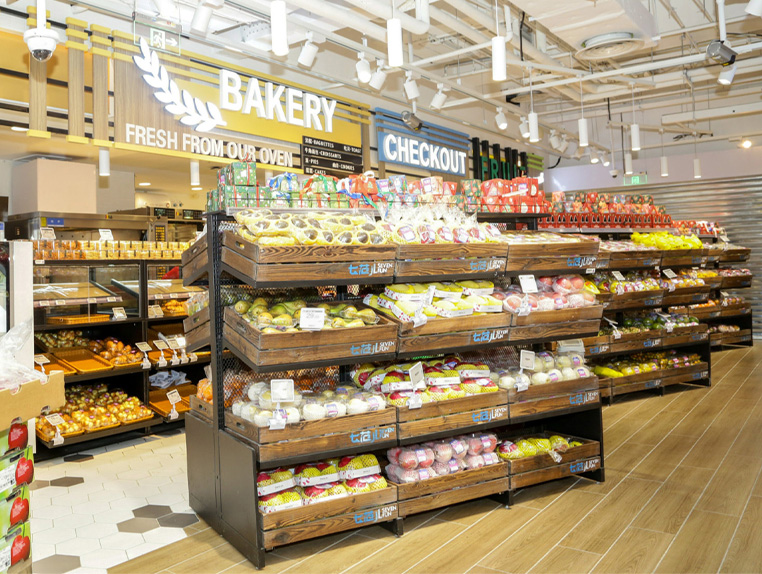
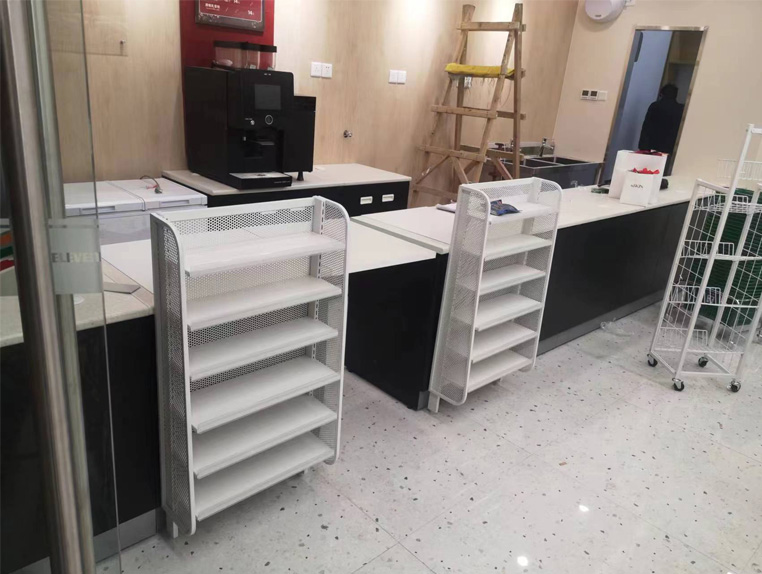
Many bosses favor convenience store shelves because their design is fully adapted to the core needs of "efficient use of space, rapid circulation of goods, and convenient customer selection" in convenience stores, which can directly reduce operating costs and improve sales efficiency. Specific analysis can be conducted from the following dimensions:
1. Good space utilization, suitable for the scenario of "small and dense" convenience stores
Convenience stores generally have limited space (mostly 50-150 square meters), and the shelves need to carry more goods in the limited space:
Multi layer design: The height of conventional convenience store shelves is usually 1.6-2.2m, divided into 4-6 layers, from the bottom layer (heavy/large goods, such as beverage boxes) to the top layer (inventory/display items), the vertical space utilization rate far exceeds that of ordinary shelves, avoiding waste of ground space.
Narrow depth specification: The shelf depth is usually 30-40cm (ordinary supermarket shelves are mostly 50cm or more), which not only ensures the display volume of goods, but also compresses the channel width (leaving 1.2-1.5m is sufficient), squeezing out more display space and passage space in a small area.
Flexible combination: It can be spliced into straight or L-shaped shelves, suitable for irregular corners of convenience stores (such as near cash registers and entrance areas), and even customized with "irregular shelves" (such as cylindrical or curved), making full use of every space.
2. Clear product display logic, guiding consumption and improving floor area efficiency
The display design of convenience store shelves directly serves to "promote immediate consumption" and helps bosses optimize their product structure:
Clear hierarchical positioning: Following the logical layout of "Golden Vision (1.2-1.5m) placing high gross profit products (such as snacks and beverages), middle layer placing essential goods (such as daily necessities, tobacco and alcohol), and bottom layer placing inventory/large packaging products", we aim to increase the exposure of profitable products and increase single customer consumption.
Zoning focus scenario: Areas can be divided according to "immediate needs" (such as placing chewing gum and lighters next to the checkout counter, drinks and fast food at the door), combined with shelf shelves, hooks (hanging snacks and stationery), and dividers (splitting small package products), allowing customers to find the target product within 30 seconds, reducing decision-making time and indirectly increasing customer traffic.
Easy to update and adjust: The height of the shelves can be freely adjusted (quickly fixed by buckles or screws), which can quickly adapt to seasonal products (such as adding a beverage layer in summer and a hot food layer in winter), or adjust the display position according to promotional activities (such as moving promotional products to the golden layer), flexibly responding to market changes.
3. Convenient operation, reducing operation and maintenance costs
Convenience stores are mostly operated by small teams, and the "easy to operate, low maintenance" characteristics of shelves are particularly important for owners:
Easy assembly and handling: Most convenience store shelves have a detachable structure (such as angle steel shelves, lightweight cold-rolled steel shelves), with a light weight (10-20kg per group), and can be assembled or moved by two people without the need for professional tools. This saves time and effort when decorating or adjusting the layout of new stores.
Easy to clean and maintain: The surface is mostly treated with spray coating and chrome plating, waterproof and oil proof, and can be wiped with a cloth for daily use; The shelf structure has no complex dead corners (such as no closed back panel, few grooves), is not easy to accumulate dust, and reduces cleaning workload.
Cost controllable: Compared to heavy-duty shelves in supermarkets (with a unit price of thousands of yuan), convenience store shelves have lower unit prices (regular models cost 300-800 yuan/set), and their durability meets the needs of convenience stores (can be maintained for 5-8 years under normal use), with less initial investment pressure on small and medium-sized owners.
4. Adapt to the "fast turnover" feature of convenience stores to ensure freshness and safety of products
Convenience store products (such as food and beverages) have fast turnover, and shelf design can assist in ensuring product management:
Open display: no closed cabinet doors (except for refrigerated shelves), convenient for staff to quickly replenish and organize goods, avoiding "empty shelves" caused by delayed replenishment; At the same time, customers can directly access the products (such as checking the shelf life of snacks and beverage dates), reducing their reliance on staff for consultation.
Load bearing matching requirements: Convenience store products are mostly light and small items (with a single weight ≤ 5kg), and the shelf load-bearing design (with a load-bearing capacity of 50-100kg per layer) is fully compatible, without the need to excessively pursue heavy load-bearing, which not only reduces shelf costs but also avoids space waste caused by excessive load-bearing.
Safe and stable: The bottom is equipped with anti slip pads or fixing holes (which can be fixed on the ground) to prevent tipping due to customer collisions or product stacking; Some shelves are equipped with guardrails (such as top guardrails) to prevent goods from falling off and reduce the risk of damage. Cracking furnace is the core equipment for producing basic organic chemical raw materials in the chemical industry. Its core function is to break down large molecule hydrocarbons (such as petroleum hydrocarbons and natural gas) into small molecule olefins, alkynes, etc. through "high-temperature thermal cracking", providing key raw materials for the subsequent chemical industry chain. Its applications are concentrated in the following core areas:
1. Petrochemical industry: Production of basic olefins (core application scenarios)
Petrochemical industry is the main application field of cracking furnaces, with the goal of cracking intermediate products after crude oil processing (such as naphtha, ethane, propane, diesel, etc.) into "chemical cornerstones" such as ethylene, propylene, butadiene, etc., including:
Ethylene production: Ethane and naphtha are the main raw materials, which are cracked at high temperatures of 800-900 ℃ in a cracking furnace. The generated ethylene is the core raw material for manufacturing polyethylene (plastic), ethylene glycol (chemical fiber raw material), and vinyl chloride (PVC raw material), accounting for more than 90% of the global ethylene production capacity.
Production of propylene: Co produced with ethylene or separately cracked with propane and refinery liquefied gas as raw materials, propylene is used to produce polypropylene (plastics), epichlorohydrin (building materials/household appliances raw materials), acrylic acid (coating raw materials), and is the second largest olefin after ethylene.
Co production by-products: During the cracking process, butadiene (rubber raw material), benzene, and toluene (aromatic hydrocarbons used in the production of chemical fibers and dyes) are also produced, achieving comprehensive utilization of raw materials.
2. Natural gas chemical industry: cracking and utilization of low-carbon raw materials
For low-carbon components in natural gas, such as ethane and propane, high-value conversion can be achieved through cracking furnaces, especially suitable for regions with abundant natural gas resources
Ethylene production through ethane cracking: Compared to naphtha cracking, ethane raw materials are purer and have lower carbon emissions. Cracking furnaces can produce high-purity ethylene with lower energy consumption, making it one of the mainstream routes for global ethylene production capacity expansion in recent years (such as shale gas production areas in North America).
Propane cracking to produce propylene: To supplement the propylene production capacity gap, especially when propane prices have cost advantages, efficient conversion can be achieved through dedicated cracking furnaces, resulting in high purity of propylene products suitable for polypropylene production.
3. Coal Chemical Industry: Chemical Conversion of Coal Resources
In areas with abundant coal resources, cracking furnaces are used in the "olefin preparation" stage of the coal chemical industry chain to achieve the conversion of coal into chemical raw materials
Coal to olefin (MTO/MTP) matching: First, coal is converted into methanol (coal to methanol), and then the methanol is sent to the "methanol cracking furnace" for cracking into ethylene (MTO process) or propylene (MTP process) under catalyst and high temperature conditions, breaking the dependence on petroleum resources. This is the core extension direction of coal chemical industry.
Utilization of coke by-products: The by-product of coke production in coal chemical industry, "coke oven gas" (containing methane and ethane), can be sent to the cracking furnace for further cracking, recovering ethylene, propylene, etc., and improving resource utilization efficiency.
4. Other specialty chemicals: Production of specialized chemicals
In addition to basic olefins, cracking furnaces are also used to produce some specialty chemical raw materials to meet specific industry needs
Acetylene production: Using natural gas or naphtha as raw materials, acetylene is generated through a "partial oxidation cracking furnace" (high temperature+oxygen participation) for the production of vinyl chloride (PVC), vinyl acetate (adhesive raw material), etc.
Special olefins/alkynes: By adjusting the temperature, pressure, and raw material ratio of the cracking furnace, a small amount of special small molecule hydrocarbons (such as isobutene and acetylene) can be produced for use in pharmaceutical intermediates, rubber, and other fields.
1. Good space utilization, suitable for the scenario of "small and dense" convenience stores
Convenience stores generally have limited space (mostly 50-150 square meters), and the shelves need to carry more goods in the limited space:
Multi layer design: The height of conventional convenience store shelves is usually 1.6-2.2m, divided into 4-6 layers, from the bottom layer (heavy/large goods, such as beverage boxes) to the top layer (inventory/display items), the vertical space utilization rate far exceeds that of ordinary shelves, avoiding waste of ground space.
Narrow depth specification: The shelf depth is usually 30-40cm (ordinary supermarket shelves are mostly 50cm or more), which not only ensures the display volume of goods, but also compresses the channel width (leaving 1.2-1.5m is sufficient), squeezing out more display space and passage space in a small area.
Flexible combination: It can be spliced into straight or L-shaped shelves, suitable for irregular corners of convenience stores (such as near cash registers and entrance areas), and even customized with "irregular shelves" (such as cylindrical or curved), making full use of every space.
2. Clear product display logic, guiding consumption and improving floor area efficiency
The display design of convenience store shelves directly serves to "promote immediate consumption" and helps bosses optimize their product structure:
Clear hierarchical positioning: Following the logical layout of "Golden Vision (1.2-1.5m) placing high gross profit products (such as snacks and beverages), middle layer placing essential goods (such as daily necessities, tobacco and alcohol), and bottom layer placing inventory/large packaging products", we aim to increase the exposure of profitable products and increase single customer consumption.
Zoning focus scenario: Areas can be divided according to "immediate needs" (such as placing chewing gum and lighters next to the checkout counter, drinks and fast food at the door), combined with shelf shelves, hooks (hanging snacks and stationery), and dividers (splitting small package products), allowing customers to find the target product within 30 seconds, reducing decision-making time and indirectly increasing customer traffic.
Easy to update and adjust: The height of the shelves can be freely adjusted (quickly fixed by buckles or screws), which can quickly adapt to seasonal products (such as adding a beverage layer in summer and a hot food layer in winter), or adjust the display position according to promotional activities (such as moving promotional products to the golden layer), flexibly responding to market changes.
3. Convenient operation, reducing operation and maintenance costs
Convenience stores are mostly operated by small teams, and the "easy to operate, low maintenance" characteristics of shelves are particularly important for owners:
Easy assembly and handling: Most convenience store shelves have a detachable structure (such as angle steel shelves, lightweight cold-rolled steel shelves), with a light weight (10-20kg per group), and can be assembled or moved by two people without the need for professional tools. This saves time and effort when decorating or adjusting the layout of new stores.
Easy to clean and maintain: The surface is mostly treated with spray coating and chrome plating, waterproof and oil proof, and can be wiped with a cloth for daily use; The shelf structure has no complex dead corners (such as no closed back panel, few grooves), is not easy to accumulate dust, and reduces cleaning workload.
Cost controllable: Compared to heavy-duty shelves in supermarkets (with a unit price of thousands of yuan), convenience store shelves have lower unit prices (regular models cost 300-800 yuan/set), and their durability meets the needs of convenience stores (can be maintained for 5-8 years under normal use), with less initial investment pressure on small and medium-sized owners.
4. Adapt to the "fast turnover" feature of convenience stores to ensure freshness and safety of products
Convenience store products (such as food and beverages) have fast turnover, and shelf design can assist in ensuring product management:
Open display: no closed cabinet doors (except for refrigerated shelves), convenient for staff to quickly replenish and organize goods, avoiding "empty shelves" caused by delayed replenishment; At the same time, customers can directly access the products (such as checking the shelf life of snacks and beverage dates), reducing their reliance on staff for consultation.
Load bearing matching requirements: Convenience store products are mostly light and small items (with a single weight ≤ 5kg), and the shelf load-bearing design (with a load-bearing capacity of 50-100kg per layer) is fully compatible, without the need to excessively pursue heavy load-bearing, which not only reduces shelf costs but also avoids space waste caused by excessive load-bearing.
Safe and stable: The bottom is equipped with anti slip pads or fixing holes (which can be fixed on the ground) to prevent tipping due to customer collisions or product stacking; Some shelves are equipped with guardrails (such as top guardrails) to prevent goods from falling off and reduce the risk of damage. Cracking furnace is the core equipment for producing basic organic chemical raw materials in the chemical industry. Its core function is to break down large molecule hydrocarbons (such as petroleum hydrocarbons and natural gas) into small molecule olefins, alkynes, etc. through "high-temperature thermal cracking", providing key raw materials for the subsequent chemical industry chain. Its applications are concentrated in the following core areas:
1. Petrochemical industry: Production of basic olefins (core application scenarios)
Petrochemical industry is the main application field of cracking furnaces, with the goal of cracking intermediate products after crude oil processing (such as naphtha, ethane, propane, diesel, etc.) into "chemical cornerstones" such as ethylene, propylene, butadiene, etc., including:
Ethylene production: Ethane and naphtha are the main raw materials, which are cracked at high temperatures of 800-900 ℃ in a cracking furnace. The generated ethylene is the core raw material for manufacturing polyethylene (plastic), ethylene glycol (chemical fiber raw material), and vinyl chloride (PVC raw material), accounting for more than 90% of the global ethylene production capacity.
Production of propylene: Co produced with ethylene or separately cracked with propane and refinery liquefied gas as raw materials, propylene is used to produce polypropylene (plastics), epichlorohydrin (building materials/household appliances raw materials), acrylic acid (coating raw materials), and is the second largest olefin after ethylene.
Co production by-products: During the cracking process, butadiene (rubber raw material), benzene, and toluene (aromatic hydrocarbons used in the production of chemical fibers and dyes) are also produced, achieving comprehensive utilization of raw materials.
2. Natural gas chemical industry: cracking and utilization of low-carbon raw materials
For low-carbon components in natural gas, such as ethane and propane, high-value conversion can be achieved through cracking furnaces, especially suitable for regions with abundant natural gas resources
Ethylene production through ethane cracking: Compared to naphtha cracking, ethane raw materials are purer and have lower carbon emissions. Cracking furnaces can produce high-purity ethylene with lower energy consumption, making it one of the mainstream routes for global ethylene production capacity expansion in recent years (such as shale gas production areas in North America).
Propane cracking to produce propylene: To supplement the propylene production capacity gap, especially when propane prices have cost advantages, efficient conversion can be achieved through dedicated cracking furnaces, resulting in high purity of propylene products suitable for polypropylene production.
3. Coal Chemical Industry: Chemical Conversion of Coal Resources
In areas with abundant coal resources, cracking furnaces are used in the "olefin preparation" stage of the coal chemical industry chain to achieve the conversion of coal into chemical raw materials
Coal to olefin (MTO/MTP) matching: First, coal is converted into methanol (coal to methanol), and then the methanol is sent to the "methanol cracking furnace" for cracking into ethylene (MTO process) or propylene (MTP process) under catalyst and high temperature conditions, breaking the dependence on petroleum resources. This is the core extension direction of coal chemical industry.
Utilization of coke by-products: The by-product of coke production in coal chemical industry, "coke oven gas" (containing methane and ethane), can be sent to the cracking furnace for further cracking, recovering ethylene, propylene, etc., and improving resource utilization efficiency.
4. Other specialty chemicals: Production of specialized chemicals
In addition to basic olefins, cracking furnaces are also used to produce some specialty chemical raw materials to meet specific industry needs
Acetylene production: Using natural gas or naphtha as raw materials, acetylene is generated through a "partial oxidation cracking furnace" (high temperature+oxygen participation) for the production of vinyl chloride (PVC), vinyl acetate (adhesive raw material), etc.
Special olefins/alkynes: By adjusting the temperature, pressure, and raw material ratio of the cracking furnace, a small amount of special small molecule hydrocarbons (such as isobutene and acetylene) can be produced for use in pharmaceutical intermediates, rubber, and other fields.
Previous:
What are the characteristics of single-sided shel…
Next:
Why do many people like medium-sized storage shel…
【Related articles】
【Related Products】
Consultation hotline0512-52436990

- Product series
- Storage shelves
- Supermarket shelves
- Scenario display
- Supermarket shelves
- Cashier
- Wall shelf
- product display
- other parts
- product display
- Kitchen supplies
- Cleaning supplies
- Fruit and vegetable food
- Maternal and Child Home Furnishings
- About Us
- Website homepage
- About Us
- Contact Us
- News Center
- MESSAGE
 home
home
 WeChat
 telephone