 WeChat:


You Are Here:Home > Information dynamics
> Industry dynamics
NEWS CENTER
Recommended news
- What are the applications of customizing display racks in supermarkets
- Briefly introduce the wood grain transfer printing promotion table
- What is the scalability of medium-sized storage shelves
- How to reflect the product display effect of convenience store shelves
- How to do the layout of shelves in internet famous snack shops
Recommended products

What is the main function of four-way shelves in convenience stores
source:jt9998.cn | Release time:2025-09-02
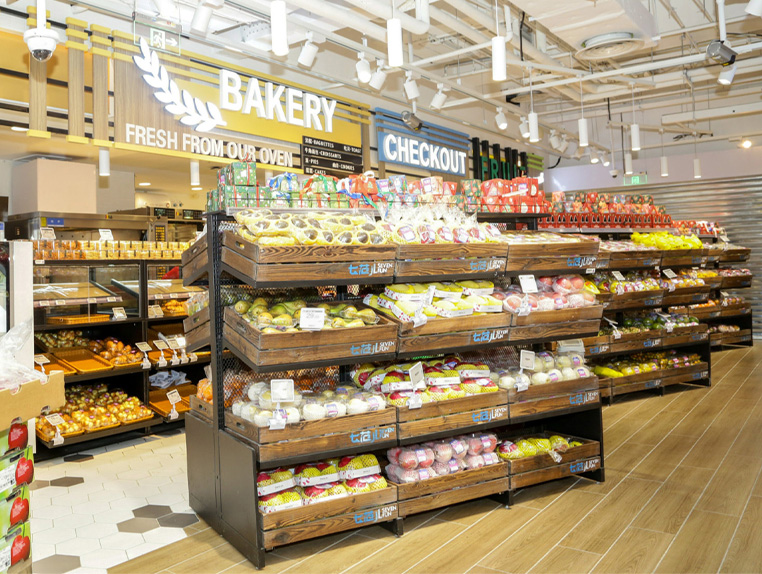
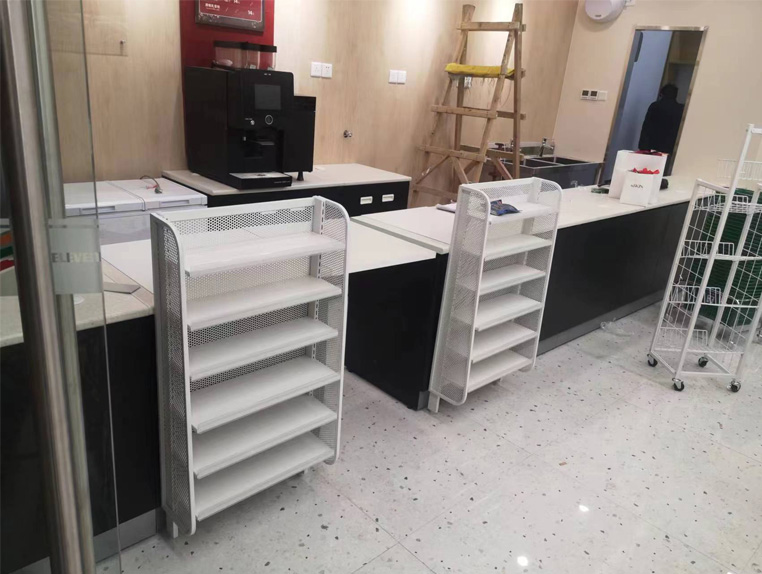
In the context of convenience stores, the "four-way shelf" is essentially a modular shelf that can achieve multi-dimensional display and space utilization of "front, back, left, and right". Its core function is to improve the efficiency of product display, optimize customer picking experience, and flexibly adapt to the display needs of different categories of products within the limited business space of convenience stores. The specific functions can be broken down into the following four points:
1. Vertical and horizontal space utilization, solving the pain points of "small space" in convenience stores
Convenience stores generally have small areas (mostly 20-100 square meters), and the core demand is to "store more goods in limited space". The four-way rack solves this problem through "four-way expansion display":
Horizontal expansion: The main body of the shelf can be designed as a "double-sided/multi sided display" (such as a central island shaped four-way shelf), with layered placement of goods (such as snacks, daily necessities, stationery) on both sides and front and back. Compared to traditional "single-sided wall shelves", the horizontal display capacity is increased by more than twice;
Vertical adaptation: The shelf height can be adjusted as needed (usually 1.2-1.8m, suitable for the height of convenience stores), and the front and rear depth of each partition can be fine tuned (such as small packaged snacks in the front row and enlarged packaged goods in the back row), avoiding vertical space waste and ensuring that customers of different heights can reach it.
2. Flexible partitioning to adapt to the "multi category, high-frequency turnover" characteristics of convenience stores
Convenience store products come in a variety of categories (including snacks, beverages, fast food, daily necessities, tobacco and alcohol, etc.), and some products (such as breakfast and promotional items) require frequent adjustment of display positions. The "four-way adjustability" of the four-way frame precisely meets this requirement:
Flexible category partitioning: The four-way rack can be divided into multiple small units (such as hanging drinks on the left side, bread on the right side, promotional snacks in the front row, and inventory replenishment in the back row) by adding partitions, hooks, shelves, and other accessories, achieving "one rack for multiple uses";
Convenient dynamic adjustment: If a certain type of product is popular (such as summer drinks), the height/front and rear positions of the four-way shelf can be quickly adjusted to expand the display area of that category; If a temporary promotional area (such as holiday gift boxes) needs to be launched, multiple sets of four-way shelves can also be spliced together to form an independent "promotional island" without the need to modify the fixed shelves.
3. Optimize customer pick-up experience and reduce the difficulty of "finding/picking up goods"
Convenience store customers are mostly engaged in "instant consumption" (such as rushing to buy water or snacks), and have a high demand for "quickly finding products and easily retrieving them". Four way frame improves convenience through structural design:
No dead corners display: Compared to the problem of traditional wall mounted shelves that cannot be reached from the back, the four-way shelf (especially the middle island style) has a "front and rear two-way retrievable" design, allowing customers to pick up goods from both sides of the shelf without having to go to the back, reducing wasted flow;
Visual clarity: The shelves of the four-way rack are mostly designed to be transparent (such as metal mesh, transparent acrylic), or have a slight gradient in front and back height (slightly lower in the front row and slightly higher in the back row), allowing customers to clearly see the products deep inside the shelf, avoiding "missing out on purchases due to inability to see" and reducing "confusion caused by searching for products".
4. Auxiliary space function, adapted to the "multifunctional scene" needs of convenience stores
In addition to the core product display, four-way shelves can also undertake some auxiliary functions, improving the overall operational efficiency of convenience stores:
Temporary storage replenishment: A "inventory storage area" can be reserved at the bottom or back of the shelves (such as placing more boxes of beverages and snacks), so that the staff do not need to frequently go to the back-end warehouse to replenish, reducing the replenishment flow, especially suitable for peak hours (such as breakfast replenishment during morning rush hour);
Scenario based marketing carrier: The columns and shelves of the four-way rack can be pasted with price tags, promotional posters, or paired with small hooks to hang gifts (such as giving away tissues when buying snacks), forming an integrated display of "product+marketing information" and strengthening customer purchase intention (such as placing instant noodles and sausages on the same four-way rack to guide "matching purchases").
1. Vertical and horizontal space utilization, solving the pain points of "small space" in convenience stores
Convenience stores generally have small areas (mostly 20-100 square meters), and the core demand is to "store more goods in limited space". The four-way rack solves this problem through "four-way expansion display":
Horizontal expansion: The main body of the shelf can be designed as a "double-sided/multi sided display" (such as a central island shaped four-way shelf), with layered placement of goods (such as snacks, daily necessities, stationery) on both sides and front and back. Compared to traditional "single-sided wall shelves", the horizontal display capacity is increased by more than twice;
Vertical adaptation: The shelf height can be adjusted as needed (usually 1.2-1.8m, suitable for the height of convenience stores), and the front and rear depth of each partition can be fine tuned (such as small packaged snacks in the front row and enlarged packaged goods in the back row), avoiding vertical space waste and ensuring that customers of different heights can reach it.
2. Flexible partitioning to adapt to the "multi category, high-frequency turnover" characteristics of convenience stores
Convenience store products come in a variety of categories (including snacks, beverages, fast food, daily necessities, tobacco and alcohol, etc.), and some products (such as breakfast and promotional items) require frequent adjustment of display positions. The "four-way adjustability" of the four-way frame precisely meets this requirement:
Flexible category partitioning: The four-way rack can be divided into multiple small units (such as hanging drinks on the left side, bread on the right side, promotional snacks in the front row, and inventory replenishment in the back row) by adding partitions, hooks, shelves, and other accessories, achieving "one rack for multiple uses";
Convenient dynamic adjustment: If a certain type of product is popular (such as summer drinks), the height/front and rear positions of the four-way shelf can be quickly adjusted to expand the display area of that category; If a temporary promotional area (such as holiday gift boxes) needs to be launched, multiple sets of four-way shelves can also be spliced together to form an independent "promotional island" without the need to modify the fixed shelves.
3. Optimize customer pick-up experience and reduce the difficulty of "finding/picking up goods"
Convenience store customers are mostly engaged in "instant consumption" (such as rushing to buy water or snacks), and have a high demand for "quickly finding products and easily retrieving them". Four way frame improves convenience through structural design:
No dead corners display: Compared to the problem of traditional wall mounted shelves that cannot be reached from the back, the four-way shelf (especially the middle island style) has a "front and rear two-way retrievable" design, allowing customers to pick up goods from both sides of the shelf without having to go to the back, reducing wasted flow;
Visual clarity: The shelves of the four-way rack are mostly designed to be transparent (such as metal mesh, transparent acrylic), or have a slight gradient in front and back height (slightly lower in the front row and slightly higher in the back row), allowing customers to clearly see the products deep inside the shelf, avoiding "missing out on purchases due to inability to see" and reducing "confusion caused by searching for products".
4. Auxiliary space function, adapted to the "multifunctional scene" needs of convenience stores
In addition to the core product display, four-way shelves can also undertake some auxiliary functions, improving the overall operational efficiency of convenience stores:
Temporary storage replenishment: A "inventory storage area" can be reserved at the bottom or back of the shelves (such as placing more boxes of beverages and snacks), so that the staff do not need to frequently go to the back-end warehouse to replenish, reducing the replenishment flow, especially suitable for peak hours (such as breakfast replenishment during morning rush hour);
Scenario based marketing carrier: The columns and shelves of the four-way rack can be pasted with price tags, promotional posters, or paired with small hooks to hang gifts (such as giving away tissues when buying snacks), forming an integrated display of "product+marketing information" and strengthening customer purchase intention (such as placing instant noodles and sausages on the same four-way rack to guide "matching purchases").
Consultation hotline0512-52436990

- Product series
- Storage shelves
- Supermarket shelves
- Scenario display
- Supermarket shelves
- Cashier
- Wall shelf
- product display
- other parts
- product display
- Kitchen supplies
- Cleaning supplies
- Fruit and vegetable food
- Maternal and Child Home Furnishings
- About Us
- Website homepage
- About Us
- Contact Us
- News Center
- MESSAGE
 home
home
 WeChat
 telephone