 WeChat:




You Are Here:Home > Information dynamics
> Industry dynamics
NEWS CENTER
Recommended news
- What are the applications of customizing display racks in supermarkets
- Briefly introduce the wood grain transfer printing promotion table
- What is the scalability of medium-sized storage shelves
- How to reflect the product display effect of convenience store shelves
- How to do the layout of shelves in internet famous snack shops
Recommended products

Why do many industries use heavy-duty storage shelves
source:jt9998.cn | Release time:2025-07-01
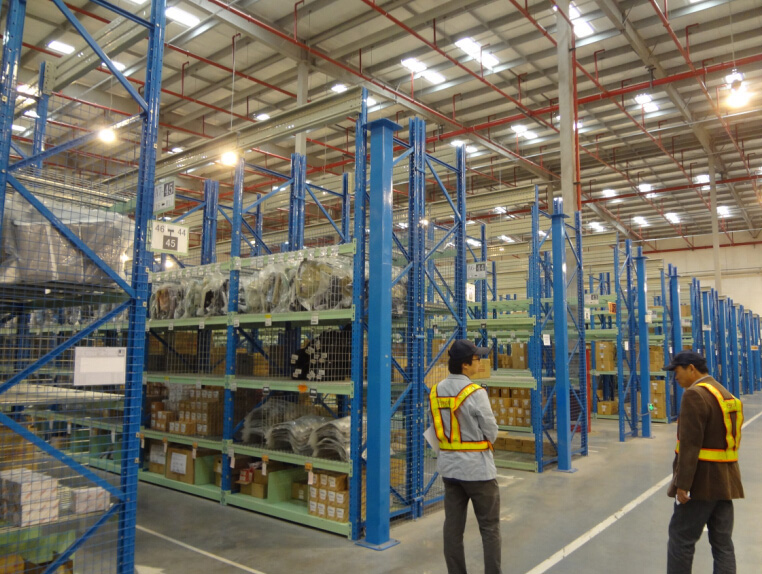
Heavy duty storage shelves are widely used in various fields due to their high load-bearing capacity, high space utilization, and convenient access, which can effectively solve the core pain points in warehouse management in various industries. The following analyzes the reasons for its popularity from the perspective of industry demand:
1. Manufacturing industry: meeting the storage needs of bulk materials and finished products
Automotive/Mechanical Manufacturing:
Storage of heavy components such as engines and transmissions, with a single shelf capable of bearing several tons, to avoid material loss caused by ground stacking.
Cooperate with forklift operations to achieve efficient integration between production lines and warehouses, and shorten material turnover cycles.
Building materials/chemical industry:
Storing heavy goods such as steel, pipes, and cement, the multi-layered structure fully utilizes vertical space and reduces warehouse footprint.
Chemical raw materials are classified and stored to avoid safety hazards caused by mixing, while also facilitating inventory checks.
2. Logistics and warehousing: improving the efficiency of bulk cargo logistics conversion
Third party logistics (3PL):
Faced with large items such as household appliances and furniture, heavy-duty shelves can achieve batch storage, combined with pallet stacking, with a single pallet bearing capacity of over 1 ton.
The alleyway layout supports mechanical access, and the daily cargo throughput is increased by more than 30% compared to traditional warehousing.
E-commerce warehousing:
During the big promotion period, a large number of packages are temporarily stored, and the shelf structure is stable and can withstand high-frequency loading and unloading, avoiding the risk of collapse.
3. Food and Medicine: Compliant Storage and Safety Management
Food processing industry:
Storage of heavy goods such as grain, oil, canned goods, etc., with shelves designed to meet hygiene standards to prevent moisture contamination of food on the ground.
Partition storage of products with different shelf lives to achieve effective management and reduce inventory waste.
In the field of pharmaceutical circulation:
Compliant with GSP standards, heavy-duty shelves are used to store large medical equipment and drug packaging boxes, with a load-bearing capacity that meets compliance requirements while avoiding drug crushing and damage.
4. Retail and Wholesale: Distribution and Display of Bulk Goods
Supermarket Distribution Center:
Storage of whole boxes of beverages, daily necessities, etc., with shelf channel width adapted to transport vehicles, supporting fast sorting and distribution.
Wholesale of bulk commodities:
The steel market and building materials wholesale market use heavy-duty shelves to stack goods in layers, allowing customers to visually view inventory specifications and improve transaction efficiency.
5. Cold chain logistics: adapting to storage needs in special environments
Cold storage:
Heavy duty shelves made of low-temperature resistant materials (such as galvanized steel) can be stably used in an environment of -30 ℃, storing frozen meat, seafood and other heavy goods to avoid low-temperature deformation of ordinary shelves.
Three dimensional storage reduces waste of cold storage space and lowers related energy consumption costs.
6. E-commerce and express delivery: core equipment for handling large packages
Express Distribution Center:
Storing unsorted large packages (such as furniture and appliances), the shelves have strong load-bearing capacity and can flexibly adjust the floor height to accommodate goods of different sizes.
Integrate with conveyor lines to achieve automated sorting and improve logistics efficiency.
1. Manufacturing industry: meeting the storage needs of bulk materials and finished products
Automotive/Mechanical Manufacturing:
Storage of heavy components such as engines and transmissions, with a single shelf capable of bearing several tons, to avoid material loss caused by ground stacking.
Cooperate with forklift operations to achieve efficient integration between production lines and warehouses, and shorten material turnover cycles.
Building materials/chemical industry:
Storing heavy goods such as steel, pipes, and cement, the multi-layered structure fully utilizes vertical space and reduces warehouse footprint.
Chemical raw materials are classified and stored to avoid safety hazards caused by mixing, while also facilitating inventory checks.
2. Logistics and warehousing: improving the efficiency of bulk cargo logistics conversion
Third party logistics (3PL):
Faced with large items such as household appliances and furniture, heavy-duty shelves can achieve batch storage, combined with pallet stacking, with a single pallet bearing capacity of over 1 ton.
The alleyway layout supports mechanical access, and the daily cargo throughput is increased by more than 30% compared to traditional warehousing.
E-commerce warehousing:
During the big promotion period, a large number of packages are temporarily stored, and the shelf structure is stable and can withstand high-frequency loading and unloading, avoiding the risk of collapse.
3. Food and Medicine: Compliant Storage and Safety Management
Food processing industry:
Storage of heavy goods such as grain, oil, canned goods, etc., with shelves designed to meet hygiene standards to prevent moisture contamination of food on the ground.
Partition storage of products with different shelf lives to achieve effective management and reduce inventory waste.
In the field of pharmaceutical circulation:
Compliant with GSP standards, heavy-duty shelves are used to store large medical equipment and drug packaging boxes, with a load-bearing capacity that meets compliance requirements while avoiding drug crushing and damage.
4. Retail and Wholesale: Distribution and Display of Bulk Goods
Supermarket Distribution Center:
Storage of whole boxes of beverages, daily necessities, etc., with shelf channel width adapted to transport vehicles, supporting fast sorting and distribution.
Wholesale of bulk commodities:
The steel market and building materials wholesale market use heavy-duty shelves to stack goods in layers, allowing customers to visually view inventory specifications and improve transaction efficiency.
5. Cold chain logistics: adapting to storage needs in special environments
Cold storage:
Heavy duty shelves made of low-temperature resistant materials (such as galvanized steel) can be stably used in an environment of -30 ℃, storing frozen meat, seafood and other heavy goods to avoid low-temperature deformation of ordinary shelves.
Three dimensional storage reduces waste of cold storage space and lowers related energy consumption costs.
6. E-commerce and express delivery: core equipment for handling large packages
Express Distribution Center:
Storing unsorted large packages (such as furniture and appliances), the shelves have strong load-bearing capacity and can flexibly adjust the floor height to accommodate goods of different sizes.
Integrate with conveyor lines to achieve automated sorting and improve logistics efficiency.
【Related articles】
【Related Products】
Consultation hotline0512-52436990

- Product series
- Storage shelves
- Supermarket shelves
- Scenario display
- Supermarket shelves
- Cashier
- Wall shelf
- product display
- other parts
- product display
- Kitchen supplies
- Cleaning supplies
- Fruit and vegetable food
- Maternal and Child Home Furnishings
- About Us
- Website homepage
- About Us
- Contact Us
- News Center
- MESSAGE
 home
home
 WeChat
 telephone